

In short
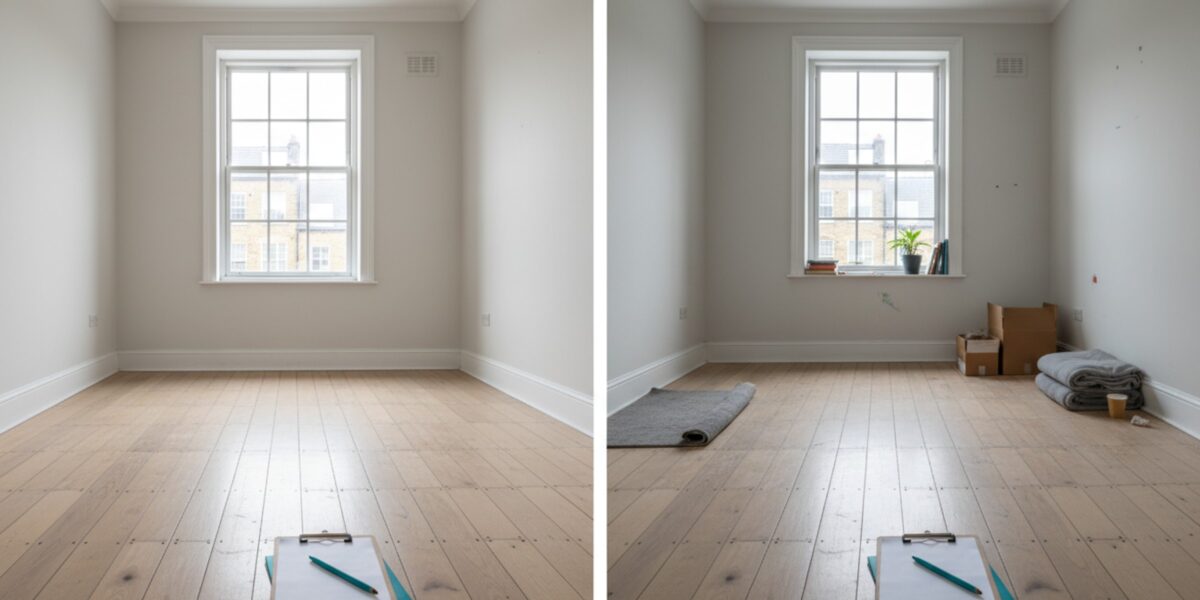
A check-in report documents property condition at tenancy start; a check-out report documents it at tenancy end. They work as a matched pair, the comparison between the two is what justifies (or rejects) deposit deductions at adjudication. Both should be produced by the same independent AIIC-accredited clerk for evidential consistency. Without both, the dispute is decided on the report you have, against the absence you don’t.
What is a check-in report?
A check-in report is the written and photographic record of a rental property’s condition on the day the tenant takes possession. It captures every room, every fixture, every appliance, and every piece of furniture (in furnished lets). Meter readings are taken. The report is signed by the tenant and the clerk and forms the legal baseline against which any future condition claim is measured.
A check-in report is not a tour of the property. It’s a forensic document. Each entry uses standardised AIIC vocabulary, good order, fair wear, scuffed, marked, stained, because those are the terms scheme adjudicators recognise when a dispute later goes to decision.
What is a check-out report?
A check-out report is the matching document, produced after the tenant has vacated and removed all belongings. The clerk returns to the property with the original check-in report and works through it section by section, noting changes. Anything beyond fair wear and tear is itemised with photographic evidence taken from the same angles as the original check-in shots. Final meter readings are taken. The report is signed off and delivered to the landlord.
The check-out is not just “another inventory.” It’s an answer to the check-in, every observation in the check-out only has evidential weight in comparison to what the check-in originally recorded.
How a check-in and check-out report work together
This is the part most landlord guides miss.
When a deposit dispute reaches a scheme adjudicator (TDS, DPS, or MyDeposits), they do not simply read the check-out report and decide whether the damage looks reasonable. They overlay the check-out against the check-in to establish what changed. A wall that’s marked at check-out only justifies a deduction if the check-in recorded the wall as good order. A scuffed skirting board only counts if it wasn’t scuffed at move-in.
If only one report exists, typically the check-out, because landlords forgot or skimped on the check-in, the adjudicator has no baseline. The default position in that situation is to decide in the tenant’s favour, because the burden of proof for a deduction sits with the landlord. This is the single most common reason landlords lose otherwise-valid claims.
Side-by-side: check-in vs check-out
The two reports look superficially similar but have different evidential roles:
| Element | Check-in report | Check-out report |
|---|---|---|
| When produced | On or just before the day the tenant moves in | After the tenant has vacated and removed belongings |
| Purpose | Establishes the legal baseline for the tenancy | Documents condition for comparison against baseline |
| Tenant attendance | Tenant attends and signs | Tenant attendance optional but recommended |
| Photographic depth | Comprehensive, every room, fixture, defect | Focused, same angles as check-in, plus any new defects |
| Meter readings | Opening readings recorded | Closing readings recorded |
| Signatures | Landlord (or agent) + tenant + clerk | Landlord (or agent) + tenant (if present) + clerk |
| Use in dispute | Reference baseline, the document being measured against | The document making the claim, must be cross-referenced to the check-in to count |
| Delivery target | Before tenant moves in (issue same day) | Within 72 hours of inspection (Click Inventories standard) |
What happens during a check-in
A typical Click Inventories check-in for a 1- or 2-bed London property takes 90 minutes to two hours on site. The clerk works through the property room by room, photographing each notable feature and recording condition in writing on the tablet. Tenant attendance is essential, the tenant walks through with the clerk, asks questions, and signs the report on completion. The signed PDF is delivered to both parties within 72 hours.
If the tenant disputes any detail at the check-in, that disagreement is recorded in the report itself. A check-in is not an inspection the tenant “passes” or “fails”, it’s a factual baseline both parties acknowledge.
What happens during a check-out
A check-out is more focused than a check-in because the clerk has the original report as a guide. The clerk visits the property after the tenant has fully vacated, walks through with the check-in open, and notes:
- Items in the check-in that have changed (damage beyond fair wear)
- Items that are missing (furnished lets)
- Items that have been added without consent (alterations)
- Cleanliness state at handover
- Final meter readings
Tenant attendance at check-out is recommended but not always practical. Where the tenant is not present, the clerk’s report stands as the independent record. If the tenant later disputes the check-out, the absence of attendance does not invalidate it, but tenant-present check-outs are slightly stronger evidentially because the tenant has had the opportunity to comment in real time.
What if the tenant refuses to sign or disagrees?
A check-in or check-out report does not require tenant agreement to be valid. The clerk’s report is the independent record. A tenant’s refusal to sign is itself recorded in the report, and is typically treated by adjudicators as suspicious rather than exculpatory. If the tenant disputes specific items, the dispute is annotated alongside the clerk’s observation, and adjudication later weighs both.
The strongest landlord position is to have both reports produced by the same independent AIIC clerk, with both signed where possible. The weakest position is to have no check-in at all, which removes the baseline the check-out is meant to be measured against. See our pillar guide on property inventory reports for the full evidence hierarchy at adjudication.
How much does check-in + check-out cost?
Click Inventories runs a standing bundle discount: book a check-in and check-out together and the check-in is 50% off. For a 1-bed London flat, that’s £140 (check-in standalone) + £130 (check-out standalone) bundled at £200, saving £70 against the standalone total. Full price tables are on our inventory clerk fees page.
A useful frame: when a contested deposit dispute reaches scheme adjudication, the landlord’s exposure is the disputed deduction amount plus the time cost of evidence preparation, submission, and waiting on the adjudicator’s decision. Full check-in + check-out documentation is typically the cheapest insurance against that exposure, and it’s what determines whether the landlord wins or loses the dispute.
Working with Click Inventories
Every Click Inventories check-in and check-out is produced by an AIIC-accredited clerk, with signed reports delivered within 72 hours of inspection. Where you book both together, the same clerk handles both inspections for evidential consistency. For the role of the clerk more broadly, see our guide to inventory clerks. For a worked example of what the finished report contains, see our inventory report example breakdown.
You can also see our property inventory check-in and check-out services or read about why landlords choose us.
Frequently asked questions
Do I need a check-in report if I already have a check-out?
Yes. A check-out report on its own is weak evidence because there’s nothing to compare it against. Scheme adjudicators decide deposit disputes by overlaying the check-out on the check-in to establish what actually changed during the tenancy. Without a check-in baseline, adjudicators typically decide in the tenant’s favour, the burden of proof is on the landlord, and a check-out alone doesn’t meet it.
Should the tenant attend the inspection?
Yes for the check-in (essential, they sign the baseline document on the day). Recommended for the check-out, but not always practical. If the tenant can’t attend the check-out, the clerk’s independent report still stands; the absence of attendance is recorded in the report. Tenant-present check-outs are marginally stronger evidentially because the tenant has had the opportunity to comment in real time.
What if the tenant refuses to sign?
A refusal to sign does not invalidate the report. The clerk records the refusal in the report itself, and the document stands as the clerk’s independent observation. Adjudicators typically view tenant refusal-to-sign as a red flag against the tenant’s case rather than a defence, particularly when the tenant has not raised specific objections to specific items.
Is a check-in report legally required?
Not statutorily required. But the Tenancy Deposit Protection (TDP) framework effectively requires baseline documentation because scheme adjudicators cannot decide disputes in the landlord’s favour without it. In practice, no check-in means no usable deduction claim, so while not legally mandatory, it is operationally mandatory if the landlord wants to protect the deposit position.
How quickly should the check-out follow tenancy end?
Within the same week, ideally within 48 to 72 hours of the tenant’s vacating. Delays weaken the report, opposing arguments about post-tenancy damage caused by the property being unsecured become harder to refute. Click Inventories standard delivery is the inspection conducted within the agreed window plus the signed report delivered within 72 hours.